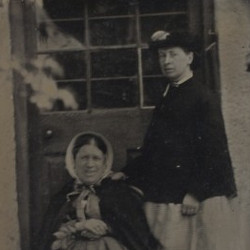
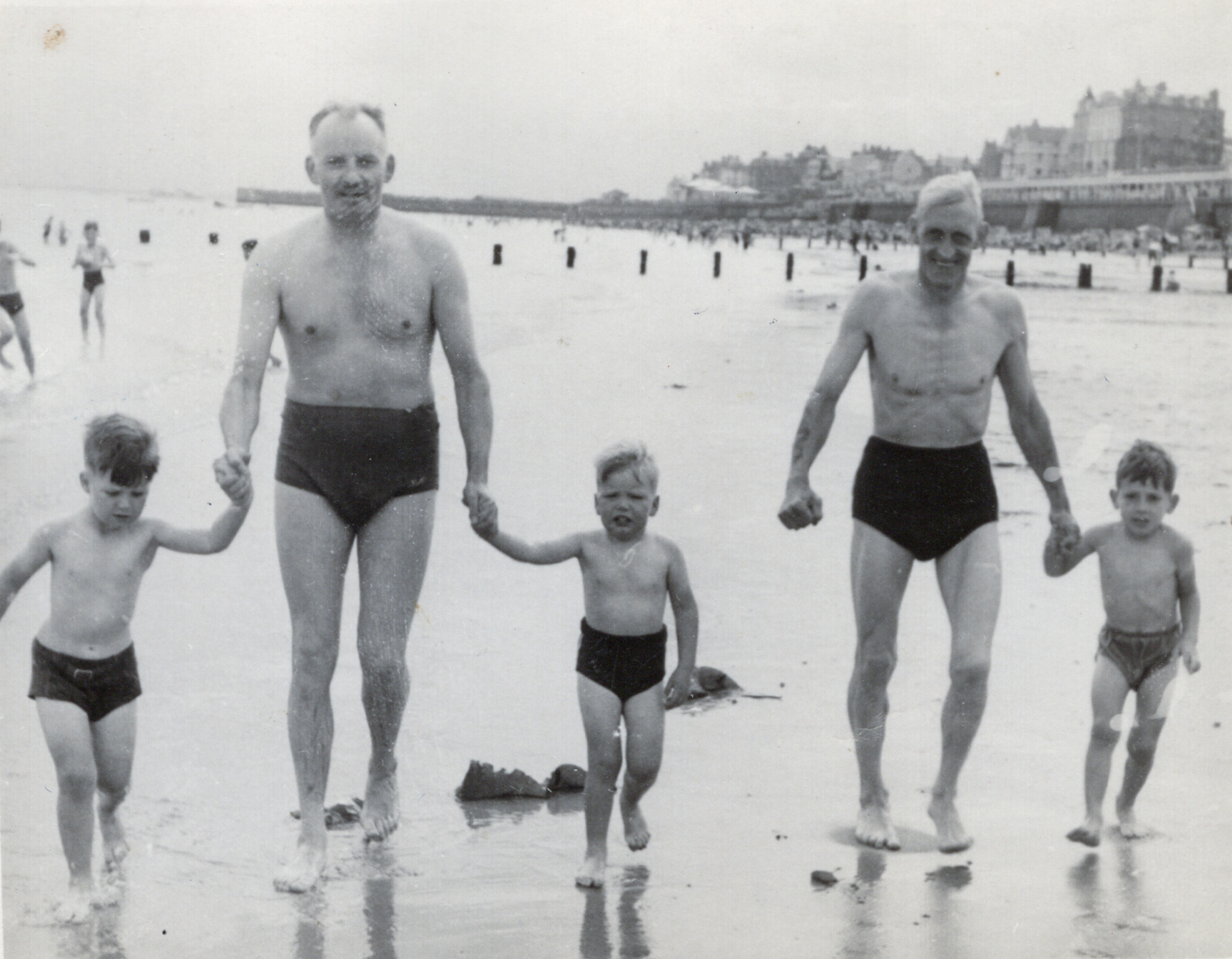
In the anthropologist Daniel Miller’s book The Comfort of Things (2008), he explores the possessions in thirty houses on an ordinary London street. One of these homes was owned by Hugh and Mary, Irish emigrants who spent forty years managing pubs in post World War Two England. What struck Miller about their home was the preponderance of photographs which adorned their living room. These photos memorialised long dead relatives, celebrated weddings, births, graduations, trips back to Ireland and gatherings with family and the wider Irish community in London. It even included a photograph of the farmland
where Hugh was born. Miller recognised that, for the couple, photographs transcended the geographic separations and the distances in time and space that are part and parcel of the emigrant experience. Photography’s unifying role is repeatedly referenced in the testimony which accompanies the images in this Photo Album of the Irish in England.
The images collected here reflect the many photographic formats and forms which were prevalent from the mid-twentieth century period, when most images were gathered. Formal studio portraits and official identification photographs (such as the one on the travel permit required by Bridget Rodden during and after the Second World War) vie with more casual snapshots in black-and-white and later in colour. The colour of the film stock evokes a particular period, for example, the technicolour film perfectly captured the stylish yellow tights and dress worn by Susan Griffin on the occasion of her brother’s first communion in the 1970s. These various formats and genres could appear in the same album, mixing generations and locations to create hybrid documents reflecting the split consciousness of the emigrant.
Many of the photographs in this collection reflect the post-war exodus from Ireland, when the need to rebuild English cities coincided with the Irish State’s failure to provide economic stability for many of its citizens. Large families and small farms meant that many were forced to seek a living outside of Ireland, and for these economic migrants the move from the rural to the urban could represent an extreme culture shock. This is not to say that those from Irish cities did not leave, and it is great to see that element of Irish emigration is recorded in this volume. As we now know, in addition to economic
reasons there are and were a myriad of reasons to leave and many of those who bore the brunt of incarceration in mother and baby homes and industrial schools were understandably drawn to England. Likewise, the anonymity of large cities provided freedom from family control and restrictive notions of sexuality and gender. For many, England provided a chance to start again, although this was not without its challenges. Many of the contributors allude to the Troubles and the difficulties that they encountered during this period. This was in addition to general anti-Irish sentiment and the dislocation of leaving all one knows behind. What the family photographic archives reflect is the resilience and coping mechanisms that were employed by Irish migrants
and as a result, the volume is full of joyful although sometimes poignant images.
Some found support and identity through their participation in Catholic church outings; attending the local Irish centre; county association dinner dances; Irish dancing competitions and sporting organisations. All of these mainstays are reflected in the images gathered by the project. Many mention the vibrant Irish dance hall scene of the 1950s and 60s, where young emigrants went to meet partners. The Galtymore in Cricklewood, North London, is perhaps the best known. However, its like was replicated in most big English cities where the Irish had emigrated to. The centrality of the
summer holiday back to Ireland, for second generation Irish children, is a recurring theme within the testimony and images. It was through these annual visits that connections were maintained and lasting bonds were forged between English and Irish cousins. Many children experienced a freedom that was lacking in their usual day-to-day lives in England and this connection with their parental origins is repeatedly mentioned by that cohort. The photographs of social gatherings and house parties are particularly joyful and fun, showing crowded gatherings in flats and houses. Indeed, the newly purchased house often featured in photographs providing tangible evidence that the emigrant had attained a certain level of stability in the new country.
In their study, Irish nurses in the NHS: an oral history, Louise Ryan, Gráinne McPolin and Neha Doshi, state that by the 1960s there were approximately 30,000 Irish-born nurses working in England’s National Health Service and indeed this is reflected in the photographs in this volume. The Brady family’s photographs (whose roots were in Longford, Cavan and Leitrim) include images of beloved and beautiful Auntie Rose who was an auxiliary nurse in Surrey. She is pictured in uniform in the 1940s and also upon a return visit to Longford in the 1950s where she is beautifully dressed and poised. Photographs of another nurse, Margaret (Rose) Eivers, form part of another family archive, and a group photographs show Tony Haughey’s colleagues at a hospital where he was psychiatric nurse. The contribution of these emigrants is celebrated and marked through the proud place their images take in family albums. This book also shows that Irish men and women met and married emigrants from other countries. Their children’s experiences enabled them to be critical of and to create new and vibrant takes on English society. This is very much reflected in the output of second-generation Irish musicians and writers. Many brought both their parents’ world and their own urban upbrings to bear. The photographs provided by Helen Zamojskyj (née Johnson) show her connection to Galway, Laois and the Ukrainian community, whilst Fiona Brandt’s history links Cavan and Bangladesh. This interconnectedness demonstrates an aspect of Irish emigration which makes it worthy of celebration.
In 2025, pattens of Irish emigration to England have changed. No longer are Irish people travelling en masse to England, other locations have found favour, and increased educational levels mean that jobs are often secured in advance. Now, there is inward emigration to Ireland, and the problems and opportunities we once sought in England are being experienced by others in Dublin or Cork.
This album shows the essence of the emigrant experience and how lives are woven together by photographs; whether they are shared memories of summer holidays in the home country or house parties marking a newly arrived friend.
Orla Fitzpatrick, 2025